 ultimate-guide
Security Credentials for Religious Organizations: 2026 Guide
Table of Contents
- Why Professional Security Credentials Matter for Religious Organizations
- Understanding Security Licensing vs. Certification
- Church Security Team Qualifications and Professional Standards
- Church Security Training: Core Competencies and Program Options
- Developing a House of Worship Security Plan with Certified Personnel
- Church Security Guard Responsibilities and Credential Maintenance
- Credential Verification, Insurance, and Legal Compliance
- Implementing Professional Credentials in Your Organization
- Frequently Asked Questions
Last Updated: October 7, 2026
Why Professional Security Credentials Matter for Religious Organizations
Religious organizations face unique security challenges: houses of worship welcome diverse crowds, operate on limited budgets, and often lack dedicated security infrastructure, leaving them vulnerable to active threats, theft, and other incidents that security credentials religious organizations can help mitigate.
Professional security credentials and certification for religious organizations establish clear standards for personnel competency, threat assessment, and emergency response. Recognized certifications create a framework that insurers recognize, legal systems respect, and congregations trust.
Credentialed teams identify threats earlier, respond proportionally, coordinate with law enforcement more effectively, reduce liability exposure, and often qualify for lower insurance premiums.
Credentials matter because they create accountability. They prove your security team understands threat assessment, knows de-escalation techniques, recognizes suspicious behavior, and won't overreact in a crisis, the difference between a managed incident and a tragedy.
Understanding Security Licensing vs. Certification
Security licensing and certification are often confused but serve different purposes. Understanding the distinction is critical for a compliant, effective security posture.
Security licensing is a government-issued credential permitting an individual to work as a security professional. In most states, licensing is mandatory for compensated security services. A license verifies a passed background check, completed training hours, and state-specific qualifications, it's about legal permission to operate.
Certification, by contrast, is issued by a professional organization or training provider validating specific skills. Certifications are voluntary but industry-recognized, demonstrating mastery of competencies like active shooter response, threat assessment, first aid, or loss prevention.
For religious organizations, you need both. Security personnel should hold valid state licenses (if paid) and relevant certifications aligned with your risks.
The practical approach: hire licensed personnel and ensure they maintain current certifications in threat assessment, CPR and basic lifesaving, emergency response, and de-escalation. This layered approach is what professional standards now expect.
Church Security Team Qualifications and Professional Standards
Your security team's qualifications determine how well they protect your congregation. Professional standards for church security personnel have evolved significantly, driven by incident response data and nationwide best practices.
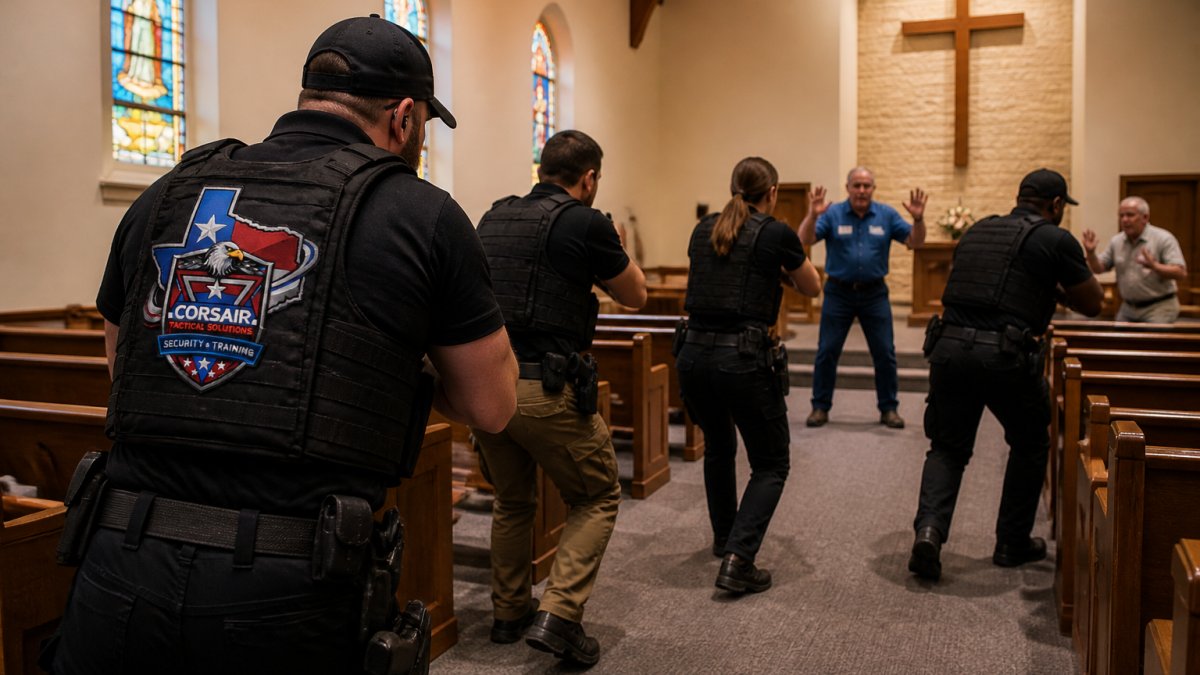
Core qualifications for a church security team include:
- State security license (Level IIl minimum for armed personnel; Level II acceptable for unarmed roles)
- Current CPR and basic lifesaving certification (American Heart Association or equivalent)
- Active shooter response training (specialized, not generic first aid)
- Threat assessment and behavioral recognition skills (ability to identify concerning behavior patterns)
- De-escalation and conflict management training (proportional response techniques)
- Communication and coordination protocols (working with law enforcement, incident command structure)
A Level II security officer certification typically requires classroom training plus a state exam. Level III and IV add armed security protocols, advanced threat assessment, and supervisory competencies.
Professional standards also emphasize screening: background checks covering criminal history, employment verification, and references. Some organizations now require psychological screening for armed personnel, especially those handling access control or active response.
Corsair Tactical Solutions has trained over 500 security professionals. Organizations investing in credentialed personnel experience fewer incidents and recover faster when they occur, and congregations report higher confidence knowing their team holds recognized credentials.
Church Security Training: Core Competencies and Program Options
Professional security training for churches must address your specific threats. Generic training misses the unique dynamics of a house of worship: diverse age groups, open access policies, high-emotion gatherings, and limited security infrastructure.
Core competencies for church security training include:
- Threat identification and risk assessment - recognizing behavioral red flags, suspicious activities, and environmental vulnerabilities specific to worship settings
- Active shooter response - tactical positioning, evacuation protocols, shelter-in-place procedures, and communication with law enforcement
- De-escalation and conflict management - verbal techniques to calm agitated individuals without physical confrontation
- CPR and emergency medical response - basic lifesaving skills and first aid for common medical emergencies during services
- Access control and visitor management - balancing welcome with security, screening protocols, and emergency lockdown procedures
- Incident documentation and reporting - proper procedures for recording incidents, preserving evidence, and coordinating with law enforcement
Training programs vary: online modules suit foundational knowledge but are insufficient alone, while in-person intensive courses better build hands-on skills like CPR, de-escalation, and tactical response. The most effective approach combines both, online for knowledge, in-person for skills and scenario practice.
Program duration matters. A single four-hour active shooter workshop is better than nothing but insufficient for operational readiness. Professional training typically spans for foundational competency, with annual refreshers. De-escalation and threat assessment require scenario-based practice, not just lecture.
When selecting a provider, verify their credentials: instructors should hold relevant certifications themselves (NRA for firearms, American Heart Association for CPR). Training should include scenario-based exercises, not just classroom instruction, and the curriculum should be faith-community-specific.
Developing a House of Worship Security Plan with Certified Personnel
A security plan is only as effective as the people implementing it. Building a house of worship security plan with certified personnel ensures your strategy translates into protective capability.
Start with a security assessment by a credentialed professional, identifying physical vulnerabilities (entry points, lighting, surveillance gaps), operational weaknesses (visitor screening, emergency procedures), and personnel gaps (training needs, role clarity).
Next, define roles and responsibilities: security coordinator, visitor screening, medical emergencies, law enforcement communication. Each role needs a named individual with documented training and certification.
Your plan should include protocols for common scenarios: a disruptive individual, a medical emergency, a fire alarm, a reported threat, an active shooter.
Certified personnel bring credibility and competence to implementation. They distinguish genuine threats from false alarms, execute de-escalation calmly, and work with law enforcement without escalating situations. Their presence signals that security is taken seriously.
Documentation is critical. Review your plan annually, update it as threats evolve, and practice through drills.
Church Security Guard Responsibilities and Credential Maintenance
Security guards in religious organizations carry significant responsibility. They're often the first line of defense during crises yet interact with congregants daily in a welcoming capacity. This dual protective and hospitable role requires specific training and ongoing credential maintenance.
Core responsibilities for a credentialed church security guard include:
- Access control and visitor screening - greeting visitors, verifying they belong, identifying concerning behavior
- Environmental scanning - observing the building and grounds during services for suspicious activity or hazards
- Emergency response coordination - activating emergency procedures, guiding evacuation, communicating with law enforcement
- Incident documentation - recording what happened, who was involved, and what response occurred
- Training and drill participation - staying current on protocols through regular practice and scenario exercises
- Liaison with law enforcement - providing information to responding officers, cooperating with investigations
Credential maintenance is often overlooked. A certification earned three years ago means little if skills aren't current. Professional standards require ongoing training, typically 8-16 hours annually for armed personnel, 4-8 for unarmed staff, including scenario-based practice, not just classroom updates.
CPR certification expires every two years, active shooter response should be refreshed annually, and threat assessment improves with case study review and scenario practice.
The most effective approach: establish a training calendar, annual CPR recertification, quarterly active shooter drills, monthly threat assessment case reviews, semi-annual de-escalation scenarios. Assign one person to track expiration dates so no credentials lapse. This keeps your team operationally ready.
Credential Verification, Insurance, and Legal Compliance
Hiring credentialed security personnel creates legal obligations: verify credentials, maintain compliance documentation, and understand how credentials affect liability exposure.
Before hiring, verify all credentials directly with the issuing authority, never rely on a candidate's word or a photocopy.
Maintain a compliance file for each team member: security license, CPR certification, active shooter training certificate, background check results, and incident reports. Update annually.
Insurance is directly affected by credential standards. Many insurers offer premium discounts for credentialed security personnel, and some require specific certifications, active shooter response training, for instance, as a condition of coverage.
Legally, credentialed personnel create accountability. If a guard causes or fails to prevent harm, your liability depends partly on whether that person was properly trained and credentialed.
The legal principle is straightforward: organizations must hire qualified personnel and maintain reasonable security measures. Credentialed personnel satisfy both expectations and document that your organization took security seriously, critical if legal action ever occurs.
Implementing Professional Credentials in Your Organization
Implementing professional security credentials requires planning, budget allocation, and sustained commitment. Many organizations start with good intentions but lose momentum after initial training.
Begin with a needs assessment: how many personnel, what roles, which threats are prioritized? A 200-member church needs a different structure than a 2,000-member organization.
Budget for training and maintenance. This is an investment, not an expense.
Corsair Tactical Solutions offers customized training for religious organizations, structured around the specific threats houses of worship face.
Implementation requires sustained leadership. Assign someone to oversee credential maintenance, schedule training, track expiration dates, and ensure compliance. They don't need to be a security expert, just organized and committed.
Finally, communicate your security posture to your congregation. Knowing the team is credentialed and trained increases confidence.
Security credentials religious organizations adopt are no longer optional, they're the baseline insurers expect, legal systems recognize, and congregations deserve.
The investment pays dividends through reduced incidents, faster emergency response, lower insurance costs, and greater congregational confidence. Our Texas DPS-certified training programs, veteran-led instruction, and faith-community focus ensure your team is genuinely prepared. Schedule a consultation to discuss your security needs and credential requirements.
Frequently Asked Questions
What are the qualifications needed for a church security team?
Church security team members should hold professional security credentials such as Level II, III, or IV security officer certifications, depending on role scope. Basic qualifications include background clearance, CPR and basic lifesaving certification, and completion of professional security training. For armed roles, personnel must meet state licensing requirements and pass comprehensive background investigations. Many organizations also require crisis response and threat assessment training specific to protecting congregations and houses of worship.
What is the difference between security training and security certification?
Security training provides foundational knowledge and skills in specific areas such as CPR, emergency response, or active threat protocols. Security certification is a formal credential earned after completing approved coursework, passing examinations, and meeting state or professional standards. Certification demonstrates verified competency and often carries legal recognition or insurance implications. Training is typically a prerequisite to certification, but certification represents a higher professional standard and credential verification capability.
How can a religious organization verify a security officer's credentials?
Request official documentation from the security officer or employer, including state licensing certificates, professional certifications, and background clearance records. Verify credentials directly with issuing bodies such as state licensing boards or professional training organizations. Ask about credential renewal dates and continuing education completion. Reputable security providers maintain current credential verification systems and can provide proof of insurance, bonding, and professional standards compliance upon request.
What training should a church security team receive?
Essential training includes basic lifesaving and CPR certification, emergency response protocols, active threat assessment and response, access control procedures, and incident documentation. Faith-community-specific training addressing congregation dynamics, de-escalation in worship settings, and cultural sensitivity is valuable. Ongoing continuing education ensures personnel stay current with evolving threat landscapes and best practices. Many organizations benefit from customized training addressing their specific facility layout, congregation size, and identified risk factors.
How often should church security teams refresh their training?
Most professional standards recommend annual refresher training at minimum. CPR and basic lifesaving certifications typically require renewal every two years. Continuing education credits may be required annually to maintain professional security certifications. Active threat response and emergency protocols should be reviewed and practiced at least semi-annually. Organizations should establish a credential maintenance schedule that aligns with state requirements, insurance policy conditions, and professional standards specific to their security posture.
Do churches need to hire certified security personnel, or can volunteers suffice?
While volunteer security teams can provide foundational support, professional certified security personnel bring verified training, background screening, and accountability that reduce organizational liability. Many insurance policies require or incentivize professional credentials for armed or uniformed security roles. A hybrid approach combining trained volunteer greeters with professional security personnel for access control, threat assessment, and emergency response is common. The appropriate mix depends on congregation size, facility complexity, identified threats, and insurance requirements.
What does a house of worship security plan include?
A comprehensive security plan addresses physical security infrastructure, personnel roles and qualifications, access control procedures, emergency response protocols, threat assessment findings, and communication systems. It documents evacuation routes, assembly areas, and communication chains for active incidents. The plan identifies specific responsibilities for trained security personnel, volunteer roles, and staff coordination. It should include provisions for credential verification of security team members, continuing education schedules, and regular plan review and updates to maintain an effective security posture.