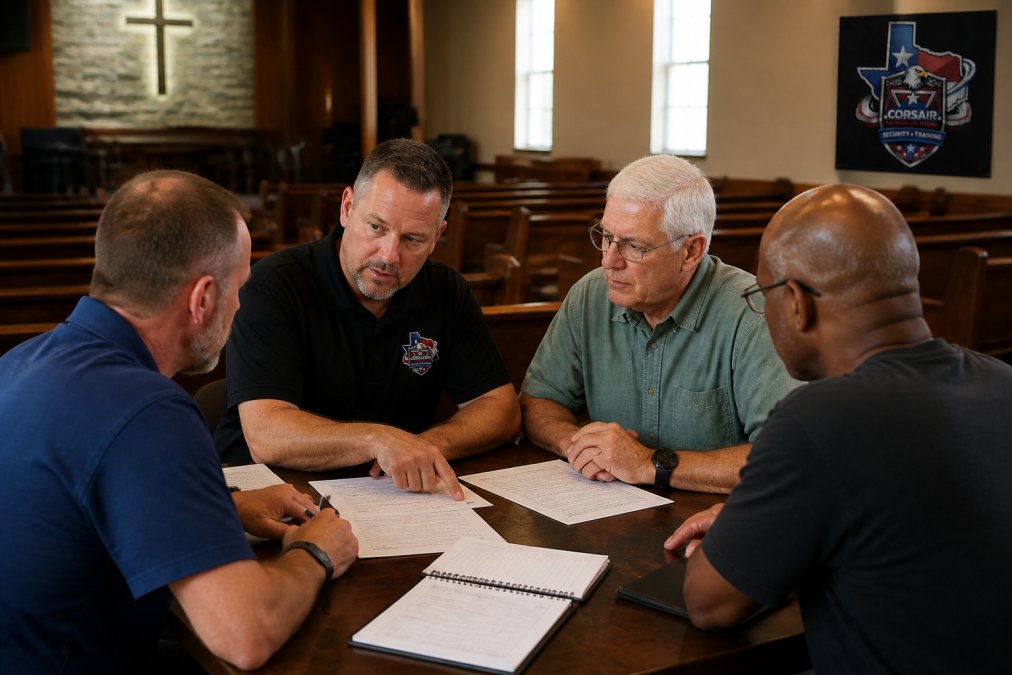
 how-to
Active Shooter Response Plan for Churches: Step-by-Step Guide
Table of Contents
- Understanding Active Shooter Threats in Houses of Worship
- Establish Your Church Security Team and Training
- Develop Your Active Shooter Response Plan
- Implement Active Shooter Drills for Churches
- Create Your Church Safety Policy Template
- Coordinate with Law Enforcement and First Responders
- Address Legal Liability and Insurance Considerations
- Frequently Asked Questions
Last Updated: September 23, 2026
Understanding Active Shooter Threats in Houses of Worship
Churches, synagogues, mosques, and other faith communities face real threats that demand practical preparation. The question isn't whether to develop an active shooter response plan, it's how to build one that actually works when lives depend on it.
An active shooter response plan framework protects your congregation by combining prevention, training, and decisive action. A prepared congregation is a safe congregation.
Establish Your Church Security Team and Training
Your security team forms the backbone of any active shooter response plan. Identify 5-8 trusted members with discipline, sound judgment, and genuine concern for your congregation's safety.
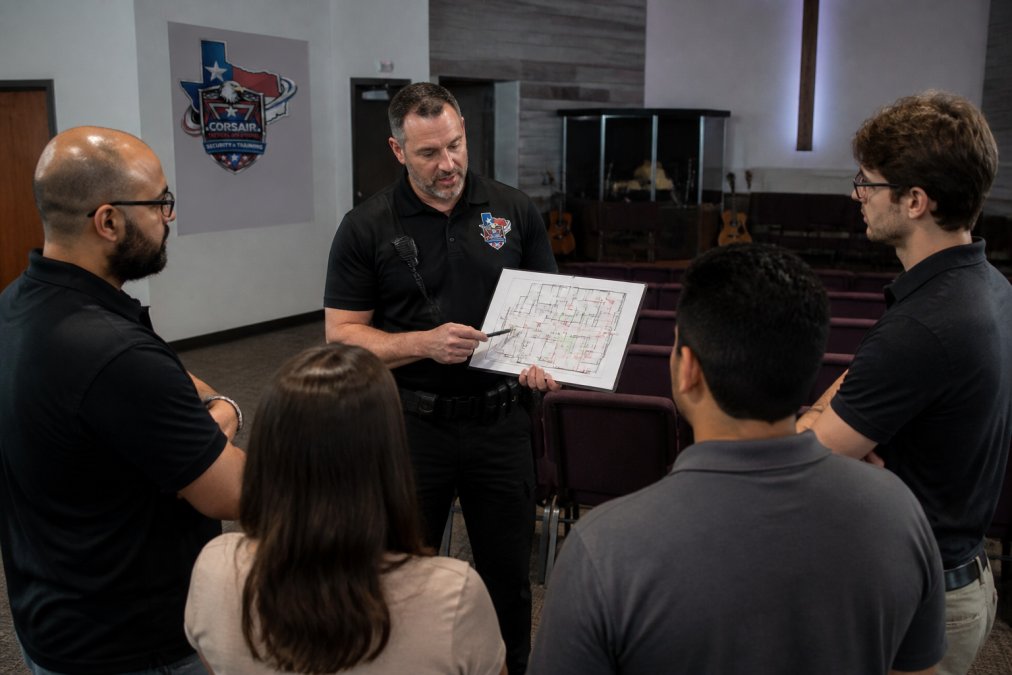
Recruitment and Vetting
Seek candidates with calm demeanor, good communication skills, and respect within your congregation. Conduct background checks through local law enforcement and document your vetting process to demonstrate due diligence.
Clear Role Definition
Assign specific, non-overlapping roles to prevent confusion during an incident:
- Security Director: Oversees planning, coordinates with law enforcement, activates the emergency plan, and makes real-time decisions during an incident.
- Access Control Lead: Manages entry points, screens visitors, and controls access to sensitive areas during normal operations and lockdowns.
- Internal Communication Officer: Sends alerts to staff and congregants using your notification system (text, email, PA system, or app).
- External Communication Lead: Contacts 911, provides updates to law enforcement, and manages information flow to media if needed.
- Assembly Point Manager: Directs evacuees to the designated assembly area, accounts for people, and prevents re-entry into the building.
- First Aid Coordinator: Provides medical assistance to injured persons and coordinates with paramedics.
- Accessibility Support Specialist: Assists elderly, disabled, or mobility-impaired congregants during evacuation or lockdown (see accessibility section below).
Each person should have a written job description and understand how their role connects to the overall response.
De-Escalation and Threat Recognition Training
Your team should receive professional instruction in recognizing warning signs before a situation escalates to active violence. Training should cover behavioral threat assessment, de-escalation techniques, when to involve law enforcement, the Run, Hide, Fight framework, and trauma-informed response. Many community colleges and law enforcement agencies offer 4-8 hour de-escalation courses, including the Crisis Intervention Team (CIT) model.
Accessibility During Team Operations
Your security team must be trained to assist congregants with mobility challenges, hearing loss, vision impairment, or cognitive disabilities. The Accessibility Support Specialist should maintain a confidential list of those needing assistance, understand their specific needs, practice evacuation techniques during drills, ensure safe rooms are accessible, and coordinate with law enforcement so officers understand that slow movement or non-response may indicate disability, not threat.
Training Schedule and Documentation
Conduct initial training for new team members before they assume their role. Schedule annual refresher training and quarterly meetings (30-60 minutes) to review procedures. Document all training dates, attendees, topics, and certifications to demonstrate preparedness and track recertification needs.
Develop Your Active Shooter Response Plan
Your written active shooter response plan should be specific and accessible to all staff and volunteers. Conduct a threat assessment: identify entry points, shelter areas, communication systems, sight lines, obstacles, and chokepoints.
Run, Hide, Fight Protocol
The Run, Hide, Fight framework aligns with Department of Homeland Security guidance. Run means evacuate immediately if there's a safe escape route; designate and mark primary and secondary routes. Hide applies when evacuation isn't safe; move to a secure location with a solid door, lock it, and wait for law enforcement. Fight is the last resort, only engage if your life is in immediate danger.
Evacuation Routes and Assembly Points
Map at least two evacuation routes from each area of your facility. Establish a designated assembly point at least 300 feet from the building, visible to law enforcement. Create a one-page evacuation map showing routes and assembly points; distribute to staff and volunteers and post in key areas so people know where to go without thinking.
Lockdown Procedures and Safe Rooms
Identify safe rooms with solid doors, working locks, and communication capability. Stock them with a phone, two-way radio, first aid kit, water, and emergency contacts. Brief occupants to lock the door, move away from windows, silence phones, and wait for law enforcement. Establish a code word or alert system so staff can notify others of a threat.
Implement Active Shooter Drills for Churches
Conduct active shooter drills at least twice yearly to capture seasonal attendance patterns. Brief participants beforehand so they understand it's a drill and can focus on learning.
Drill Progression: From Tabletop to Full-Scale
Tabletop Exercise (30-60 minutes): Walk through a realistic scenario with your security team and key staff, discussing each phase from detection through all-clear. Identify gaps in communication, roles, or resources.
Functional Drill (45-90 minutes): Designate a "shooter" to move through the building. Have participants evacuate or shelter in place as the scenario dictates. Time each phase and document bottlenecks.
Full-Scale Exercise (2-3 hours): Once yearly, conduct a comprehensive drill involving security team, staff, congregants, law enforcement, and paramedics. Simulate injuries and have paramedics practice triage.
Scenario Design
Vary scenarios: shooter in sanctuary during service, in hallway/office, outside the building, multiple shooters, and shooter with hostages. Rotate scenarios to prevent complacency.
Accessibility-Inclusive Drills
Drills must include congregants with mobility challenges, hearing loss, vision impairment, and cognitive disabilities, this is essential to your plan's effectiveness and your legal obligation under the ADA.
For mobility-impaired congregants: Practice evacuation techniques with wheelchair users and those with limited mobility.
Measuring Drill Effectiveness
Establish metrics: notification time (target: under 2 minutes), evacuation time by area (target: under 5 minutes), accounting time (target: under 10 minutes), communication clarity, and accessibility success. Record metrics for each drill and investigate if any metric stalls or worsens.
Post-Drill Debrief and Documentation
Conduct a debrief immediately after the drill. Gather feedback from security team, staff, congregants, law enforcement, and paramedics. Document the drill: date, time, scenario, participants, duration, metrics, and lessons learned. Identify specific action items with owners and deadlines. Keep all drill records for at least 3 years to demonstrate commitment to safety.
Create Your Church Safety Policy Template
A written safety policy creates accountability and ensures consistency. Your policy should address access control, visitor procedures, incident response, communication protocols, and training requirements.
Coordinate with Law Enforcement and First Responders
Contact your local police department to discuss your facility and plans. Invite law enforcement to participate in your drills and provide them with a facility map showing access points, interior layout, safe areas, and contact information for your security director. Establish a communication protocol for emergencies and brief officers on your internal communication system.
Address Legal Liability and Insurance Considerations
Preparation reduces liability. Courts recognize that organizations with documented safety plans and training programs have taken reasonable precautions. Conversely, organizations without any plan face greater liability exposure if an incident occurs.
Frequently Asked Questions
What are the three responsive steps to an active shooter situation?
The Run, Hide, Fight protocol guides your response: Run means evacuate immediately if there is a safe escape path, leaving belongings behind. Hide means barricade yourself in a secure location if evacuation is impossible, silence your phone, and remain quiet. Fight means as a last resort, when your life is in imminent danger, attempt to incapacitate the shooter using any available objects or tactics. An active shooter response plan should train all congregation members on these steps so everyone knows what to do if an incident occurs.
How often should a church conduct active shooter drills?
Conduct active shooter drills at least twice per year. Quarterly drills are ideal for larger congregations or those in higher-risk areas. Each drill should include different scenarios, evacuation from the sanctuary, lockdown in offices, and response to a shooter in the parking lot. Regular drills ensure your church security team training remains sharp and congregation members stay familiar with evacuation routes and procedures, reducing panic and confusion during a real incident.
What should a church safety policy template include?
Your church safety policy template must cover threat assessment procedures, security team roles and responsibilities, evacuation protocols, lockdown procedures, communication systems during an incident, coordination with law enforcement, post-incident recovery steps, and training schedules. Include specific details about your facility: sanctuary layout, emergency exits, safe rooms, assembly points, and communication methods. Document who is responsible for each action, how to report suspicious activity, and how to support affected congregation members and staff after an incident. Review and update your policy annually.
What legal considerations should churches keep in mind when establishing a security response plan?
Churches should document all security measures, training records, and drill participation to demonstrate a good-faith effort to protect congregants. Consult with your insurance provider and legal counsel about liability exposure and coverage. Ensure your security team follows applicable state laws regarding armed or unarmed security, use of force, and detention. Maintain confidentiality of your security plan and limit access to authorized personnel. Consider how your active shooter response plan affects accessibility for members with disabilities, and ensure evacuation procedures accommodate everyone. Proper documentation protects your congregation and organization if an incident occurs.